
How to Choose a Drone for Defence & Commercial Use (2025)
Choosing the right drone defence and commercial platform is one of the most consequential procurement decisions in 2026, as the global drone market exceeds $50 billion. Whether you are a government defence procurement officer, a security contractor, or a commercial operator evaluating drone for defence applications, this guide walks you through every critical factor—from airframe type and flight endurance to sensor payloads and regulatory compliance.
This guide walks you through everything you need to evaluate before making a purchase decision.
- Fixed wing drones offer the longest endurance; multirotor drones offer the best precision and hovering
- For defence applications, prioritize MIL-STD-810 compliance, encrypted links, and modular payload systems
- Always verify flight time under real conditions — manufacturer specs are measured in ideal environments
- Budget 20-40% above the drone base price for accessories, software, training, and maintenance
- NDAA and ITAR compliance are mandatory for U.S. government procurement in most cases
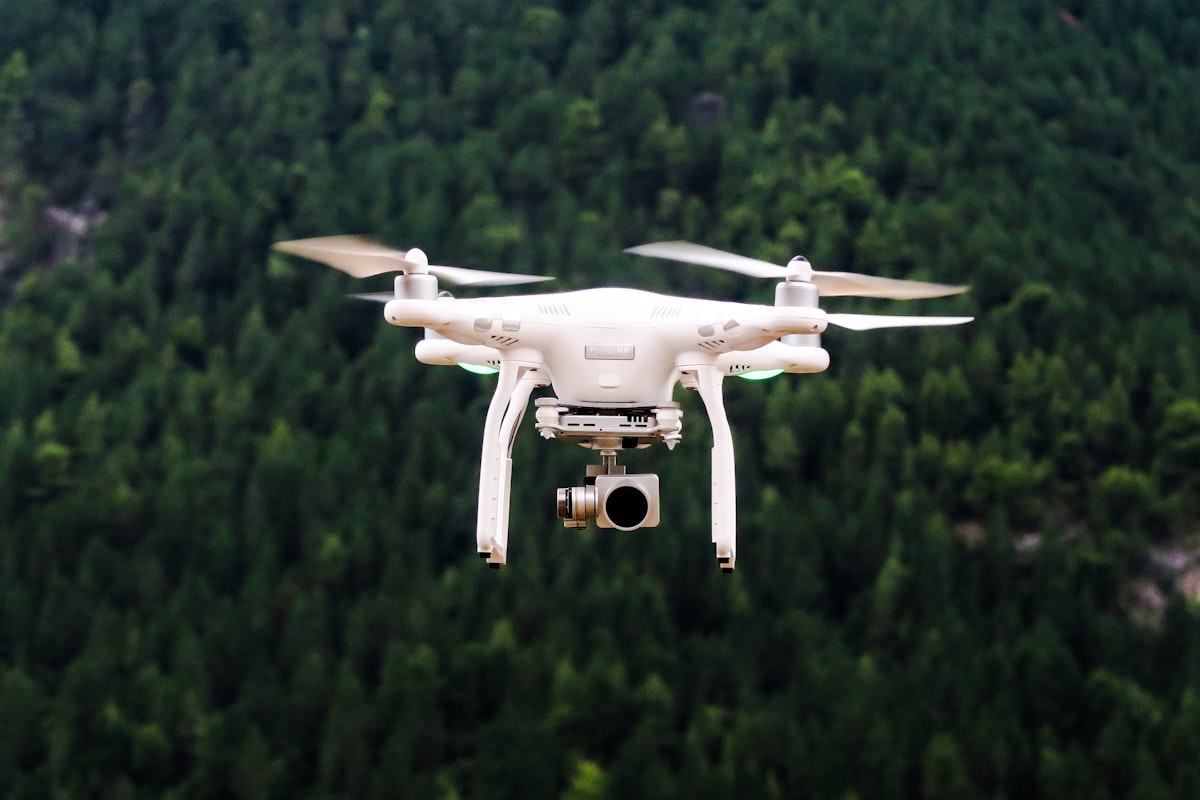
Fixed-wing UAV ideal for long-endurance border surveillance
Types of Drones: Fixed Wing vs Multirotor vs VTOL
Understanding the three main drone architectures is the foundation of any selection process. Each type serves fundamentally different operational requirements.
Fixed Wing Drones
When deciding how to choose a drone type, fixed wing drones are the top pick for long-range missions. They resemble small airplanes, generating lift from forward airspeed rather than spinning rotors, which makes them far more energy-efficient over long distances.
Best for:
- Long endurance missions (4–16+ hours flight time)
- Large area mapping and surveying
- Agricultural monitoring
- Border patrol and wide-area surveillance
Limitations:
- Cannot hover in place — requires constant forward motion
- Require runway or launcher for takeoff and landing
- Higher operator skill requirement
Multirotor Drones
Multirotor drones use multiple rotors for vertical lift and precise hovering control. They are the most versatile category for commercial and defence applications requiring定点 surveillance.
Best for:
- Surveillance and inspection at fixed points
- Close-range photography and videography
- Indoor or confined space operations
- Rapid deployment scenarios
Popular configurations:
- Quadcopter (4 rotors) — most common, stable, cost-effective
- Hexacopter (6 rotors) — motor redundancy if one fails
- Octocopter (8 rotors) — maximum payload capacity and stability
VTOL Drones (Vertical Take-Off and Landing)
VTOL drones combine fixed wing efficiency with multirotor flexibility — they take off and land vertically like a multirotor, then transition to fixed wing flight for long-range missions. This makes them ideal for operations in confined areas without runways.
Best for: Operations in confined areas, long-range inspection, emergency response in disaster zones.
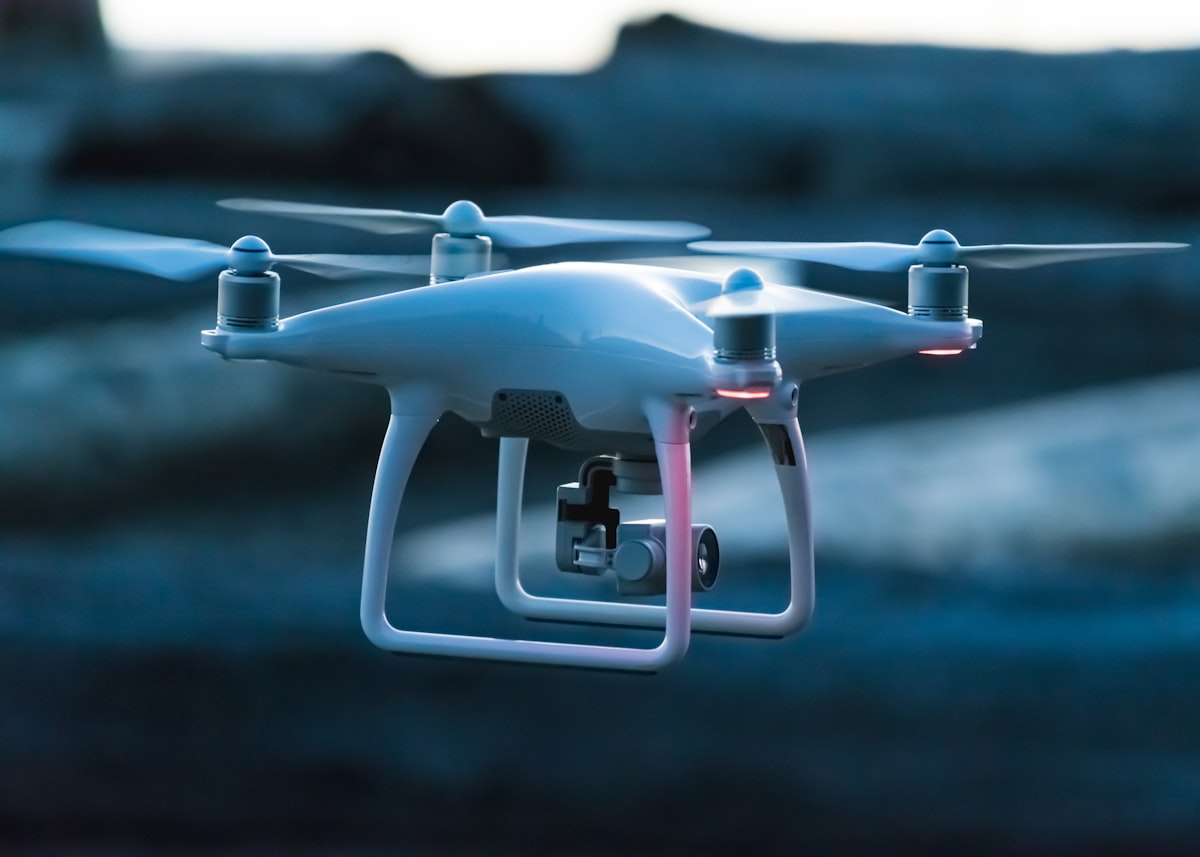
Multirotor drone for precision inspection and close-quarters operation
How to Choose a Drone: Key Specifications to Evaluate
1. Flight Time & Range
| Drone Type | Typical Flight Time | Typical Range |
|---|---|---|
| Consumer Quadcopter | 20–40 min | 5–15 km |
| Commercial Multirotor | 30–60 min | 10–30 km |
| Professional VTOL | 2–8 hours | 50–200+ km |
| Fixed Wing | 4–16+ hours | 100–500+ km |
Buyer tip: Always verify flight time under real operating conditions — manufacturer specs are measured in ideal conditions with no payload. Factor in wind resistance, elevation, payload weight, and temperature when estimating real-world endurance.
2. Payload Capacity
For defence and commercial buyers, payload capacity is often the primary factor in how to choose a drone. Calculate your payload budget by starting with the heaviest equipment you will mount, then add a 20% margin for future upgrades.
Common payload types:
- EO/IR cameras (electro-optical/infrared)
- Thermal imaging cameras (FLIR)
- LiDAR sensors for 3D mapping
- Communication relay equipment
- Search and rescue gear
3. Camera and Sensor Options
For surveillance missions, look for:
- Minimum 4K resolution with stabilized 3-axis gimbal
- Thermal camera for night and all-weather operations
- 30x or higher optical zoom for long-range identification
For mapping and surveying:
- Full-frame RGB sensor (20MP+)
- Multi-spectral sensors for agricultural analysis
- LiDAR for high-precision 3D modeling
4. Weather Resistance — IP Rating
For defence and outdoor commercial use, an IP54 or higher rating is strongly recommended. Operating temperature range should be -20°C to +50°C minimum for military-grade deployments.
| IP Rating | Dust Protection | Water Protection |
|---|---|---|
| IP54 | Dust protected | Water spray from any direction |
| IP55 | Dust tight | Water jets from any direction |
| IP67 | Completely dust tight | Temporary immersion (1m, 30 min) |
5. Autonomy and AI Capabilities
Modern commercial and defence drones increasingly include autonomous capabilities that reduce operator workload and improve mission reliability:
- Obstacle avoidance — LiDAR or stereo vision sensors
- Auto-return-to-home (RTH) — triggered on signal loss or low battery
- Waypoint navigation — pre-programmed automated flight paths
- AI-powered target tracking — active tracking of persons or vehicles
- Swarm capability — coordinated multi-drone operations
Comparing drone types for defence and commercial applications
How to Choose a Drone by Industry: Defence, Border Patrol & More
Defence & Security Applications
Government and military buyers must prioritize a different set of requirements than commercial operators:
- MIL-STD-810 compliance — military-grade environmental testing for temperature, humidity, vibration, and shock (latest defence drone procurement trends)
- Encrypted communication links — AES-256 or equivalent military-grade encryption
- Anti-jamming and GNSS spoofing resistance — critical in contested electromagnetic environments
- Silent operation — low acoustic signature for covert missions
- Modular payload system — rapid reconfiguration between mission types
Border Patrol & Law Enforcement
- Long endurance (2+ hours preferred for wide-area coverage)
- Thermal and optical cameras for all-weather, day-night operation
- Live video downlink to command center
- Rapid deployment without specialist launch equipment
Agriculture & Surveying
- High-resolution mapping cameras (5-band multispectral preferred)
- RTK/PPK accuracy for centimeter-level geolocation
- Software integration with Pix4D, DJI Terra, or similar platforms
Infrastructure Inspection
- 40x+ optical zoom for close-range inspection from safe distances
- Stable 3-axis gimbal for vibration-free imagery
- Ultrasonic and laser-based collision avoidance
- Wide operating temperature range
Budget Planning: What to Expect in 2025–2026
| Tier | Price Range | Typical Use | What You Get |
|---|---|---|---|
| Entry Commercial | $1,000 – $5,000 | Basic mapping, photography | 30-min flight, 4K camera, basic stability |
| Professional | $5,000 – $25,000 | Inspection, surveying, security | 45–60 min, thermal option, RTK, encrypted comms |
| Enterprise / Defence | $25,000 – $100,000 | Advanced surveillance, military | MIL-STD, encrypted, heavy payload, VTOL options |
| Custom / Platform | $100,000+ | Specialized govt applications | Bespoke integration, military-grade, OEM/ODM |
Part of knowing how to choose a drone wisely is budgeting beyond the purchase price. Hidden costs to budget for:
- Spare batteries — plan for 3–5 full sets ($500–$5,000)
- Ground control station hardware ($500–$3,000)
- Software licenses for mapping and photogrammetry ($1,000–$5,000/year)
- Operator training — typically 2–5 days ($1,000–$3,000/person)
- Maintenance contracts and spare parts inventory
- Regulatory compliance documentation and flight permits
Compliance and Certification Requirements
For Civilian and Commercial Use
- FAA Part 107 (USA) or your country’s equivalent
- Remote Pilot Certificate for operators
- COA (Certificate of Authorization) for operations in controlled airspace
- Registration requirements vary by drone weight and intended use
For Government and Defence Use
- ITAR compliance — International Traffic in Arms Regulations for U.S.-manufactured components
- NDAA compliance — required for most U.S. government procurement
- Export control classifications — EAR/ITAR determine international sales restrictions
- End-user certificates — required for sensitive technology transfers
Key Standards to Know
- DO-178C — Software development guidance for aviation systems
- DO-254 — Hardware design assurance for aviation electronics
- MIL-STD-810H — Environmental engineering considerations for military equipment
Top Drone Platforms for Defence & Commercial Use in 2025
| Platform | Type | Flight Time | Key Strength |
|---|---|---|---|
| DJI Matrice 350 RTK | Multirotor | 55 min | Industrial inspection, surveying, RTK precision |
| DJI Mavic 3 Enterprise | Multirotor | 45 min | Compact surveillance, thermal option |
| Wingtra One | VTOL | 59 min | Precision mapping, no runway needed |
| senseFly eBee X | Fixed Wing | 90 min | Large area survey, fully autonomous |
| Parrot Anafi USA | Multirotor | 32 min | Tactical use, IPX3 weather resistance |
| Teledyne FLIR SkyRanger R70 | VTOL | 55 min | Defence & ISR, FLIR thermal integration |
How to Vet a Drone Supplier: Red Flags to Avoid
Not all B2B drone suppliers are created equal. Use this checklist to separate reputable partners from problematic ones.
Red flags — avoid these suppliers:
- No verifiable physical address or company registration
- Refuses to provide ITAR/NDAA compliance documentation
- Pricing significantly below market rate for comparable specs
- No technical support, warranty, or after-sales service
- Vague or evasive answers about software compatibility and integration
- No published technical datasheets or test reports
Green flags — reputable supplier indicators:
- ISO 9001 or equivalent quality management certification
- Published technical datasheets, compliance certificates, and test reports
- Responsive technical sales team with domain expertise
- Established dealer and service network in your region
- Product demonstrations available before purchase commitment
- Clear warranty terms and documented SLA for support
Your Drone Selection Checklist
Before finalising any purchase, work through this checklist:
- ☐ Does the drone meet your minimum flight time requirement under real conditions?
- ☐ Can it carry your required payload weight with a 20% margin?
- ☐ Is the IP rating suitable for your operating environment?
- ☐ Does it support the cameras and sensors you need?
- ☐ Is the communication link encrypted to your security standard?
- ☐ Are replacement parts and service available in your region?
- ☐ Does the supplier provide operator training and certification?
- ☐ Is regulatory and compliance documentation included?
- ☐ What is the warranty period and support SLA?
- ☐ Has the platform been independently tested in similar conditions?
Frequently Asked Questions
Q: When learning how to choose a drone, what is the difference between surveillance and consumer drones?
A: Surveillance drones are engineered for extended, reliable operation in challenging conditions. Key differences include higher-grade cameras (thermal/EO dual sensors), encrypted communications, modular payload systems, MIL-STD environmental ratings, and extended flight times. Consumer drones prioritize portability and ease of use with limited payload options and no military-grade compliance.
Q: How long do commercial drone batteries last?
A: Commercial drone batteries (typically LiPo or Li-ion) deliver 300–500 full charge cycles before significant capacity degradation. In real-world conditions, expect 25–60 minutes per flight depending on payload weight, wind conditions, and flight style. Active thermal imaging and high-zoom cameras significantly reduce achievable flight time.
Q: Do defence drones require special certifications?
A: Yes. Defence and government drones typically require MIL-STD-810H environmental compliance, ITAR export control compliance for U.S.-manufactured components, and country-specific defence procurement regulations. Always verify requirements with your legal and procurement department before purchase.
Q: What is the best drone for border patrol operations?
A: For border patrol, VTOL drones with 4+ hour flight time, integrated thermal/EO camera payload, and live video downlink to command center are most effective. Fixed wing drones offer the longest range for wide-area coverage, while multirotor drones provide superior hovering for detailed observation of specific targets.
Q: Can commercial drones be adapted for military applications?
A: Many commercial-grade drones are adapted for military and defence use provided they meet required environmental, security, and performance specifications. Always verify with the supplier whether the platform has been independently tested to MIL-STD or equivalent defence standards before operational deployment.
Ready to Apply This Guide on How to Choose a Drone?
Choosing the right drone platform is a complex decision that requires balancing mission requirements, budget constraints, and long-term support considerations. CMSE-UAV specialises in connecting defence and commercial buyers with the right UAV platforms, components, and accessories for your specific operational requirements.
Contact our technical team for a personalised drone selection consultation, platform comparison, or OEM/ODM inquiry. We work with government agencies, security firms, and enterprise buyers worldwide.
This article is part of CMSE-UAV’s UAV Selection Guide series. For more industry-specific drone guides, visit our Blog.